Research aim
To evaluate patient satisfaction and consultation efficiency in standard endocrinology consultations compared with consultations assisted by an AI-based documentation application.
To evaluate patient satisfaction and consultation efficiency in standard endocrinology consultations compared with consultations assisted by an AI-based documentation application.
Administrative documentation during medical consultations may reduce physician–patient interaction and impact patient satisfaction.
AI-based tools designed to capture and structure medical conversations may improve consultation workflow and communication.
Patient speaks → doctor multitasking → information missed.
Patient speaks → AI records everything → information recovered → stronger clinical correlation.
| Aspect | Without AI | With AI |
|---|---|---|
| Information completeness | Partial | More complete |
| Missed details | Present | Recovered via transcript |
| Multitasking impact | High (e.g. ultrasound) | Minimal |
| Data availability post-consult | Limited | Full transcript available |
Clinically relevant information missed during the initial consultation was later identified in AI transcripts.
Missed data occurred when the patient spoke during concurrent tasks (e.g. thyroid ultrasound).
Or when information was initially perceived as non-critical.
| Physician attention | ↑ Increased |
| Communication clarity | ↑ Improved |
| Overall satisfaction | ↑ Higher |
| Consultation time | ↓ 10 min |
| Information capture | Improved |
| Missed data recovery | Yes |
| Clinical correlation | Enhanced |
AI-assisted transcription:
Reduces cognitive and administrative load.
Allows better physician focus on the patient.
Captures the full clinical conversation in real time.
AI not only saves time — it recovers clinically relevant information that would otherwise be lost.
AI-assisted transcription tools may:
Small sample size (N=20).
Single-centre study.
Qualitative assessment of information capture.
Potential learning / adaptation effect between visits.
With thanks to the patients of Clinica Dr. Novac who consented to take part in the comparative evaluation, and to the AscultAI engineering team at ApolloIQ for technical and methodological support.
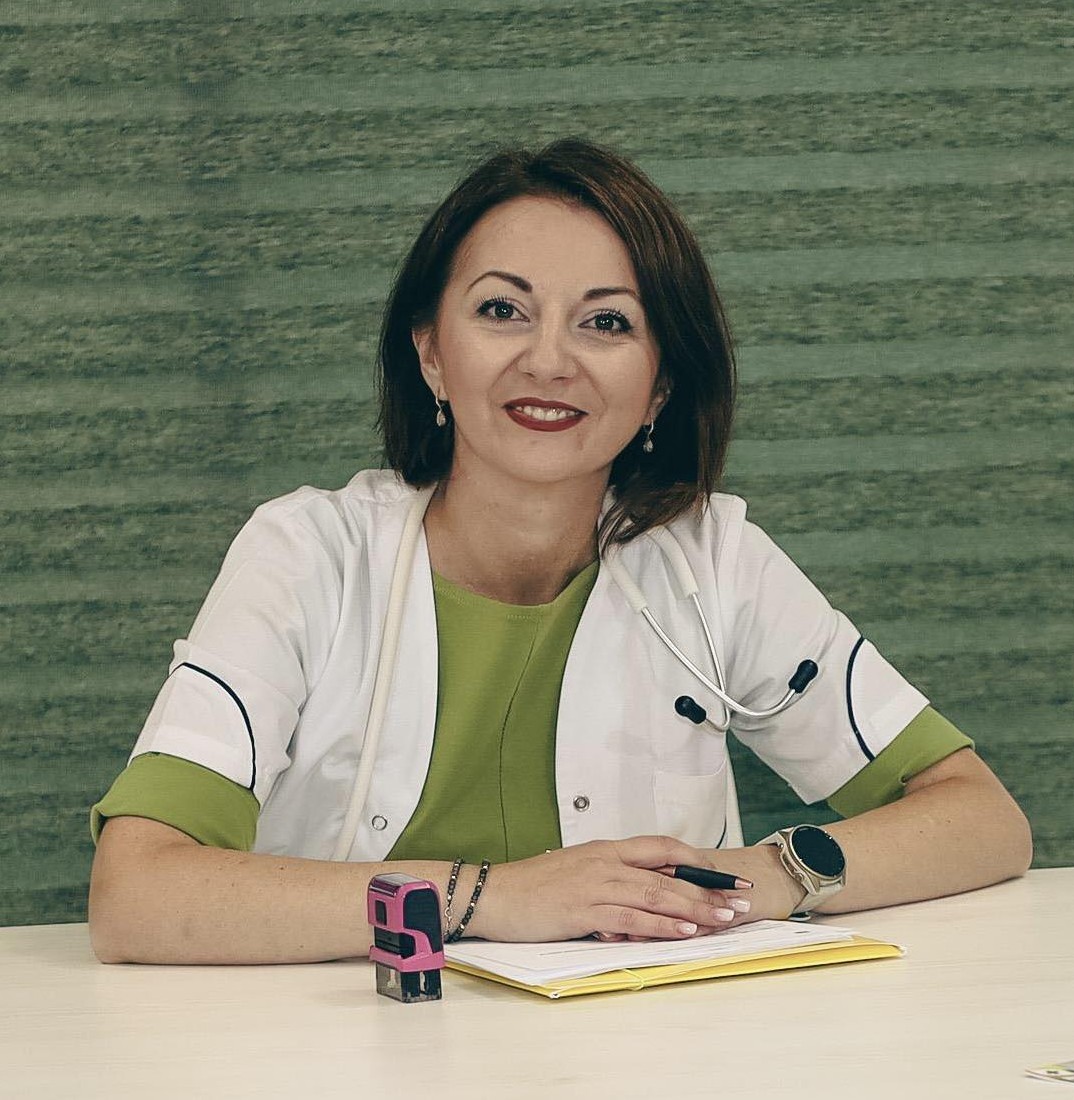
Dr Elena Roxana Novac
Clinica Dr. Novac, Bacău · Romania
Vlad Repede
MPharm IP · Ascult AI by ApolloIQ
 Case Study
 A real-world clinical evaluation of Ascult AI in specialist endocrinology — measuring the impact of AI-assisted documentation on clinician workflow, patient experience, and health-system capacity.
Senior consultant endocrinologist with 16+ years of clinical experience and an active international academic profile. Dr Novac led this independent evaluation from her specialist endocrinology practice in Bacău.
 Bacău · Romania
 Research collaborations with Prof. Dr. Brănișteanu (UMF Iași). Research themes: bone mass, adipocytokines, hyperparathyroidism, rare thyroid pathology.
Ascult AI was deployed in routine outpatient endocrinology practice over five consecutive months. Every consultation documented using the platform was logged; clinician- and patient-reported outcomes were captured continuously.
Specialist endocrinology outpatient clinic. Consultations covering thyroid disorders, diabetes, parathyroid disease, metabolic bone disease, and rare endocrine syndromes.
Ascult AI captured each consultation in real time, generating a structured Romanian-language draft (letter, observation note, ultrasound report) for clinician validation before sign-off.
Historical baseline: manual documentation averaging 15 minutes per consultation, completed during or after clinic and contributing to after-hours workload.
Time reclaimed per consultation; total patient throughput; documentation completeness; clinician-reported burden; patient-reported experience of eye-contact and engagement.
“For the first time in years, I finished clinic without a backlog of letters waiting at home. My patients noticed the difference too — the consultation felt like a conversation again, not a typing exercise.”
— Dr Elena Roxana Novac, Clinician
AI-assisted documentation translates into measurable benefit for the patient in front of the clinician, the clinic operating around them, and the wider health system demanding capacity.
The promise of ambient AI documentation is well-rehearsed in white papers. What the field has lacked is prospective evidence from a real specialist clinic over a meaningful sample — with an independent investigator, a conservative comparator, and honest outcome reporting.
Dr Novac’s 700-consultation dataset provides exactly that. It replaces a vendor claim (“clinicians save time”) with a quantified, clinician-led observation (175 hours reclaimed, +30% throughput, −90% documentation errors) from a discipline — endocrinology — where documentation complexity is high and the patient journey is long.
The scientific contribution is twofold: it demonstrates clinical benefit (restored patient contact, more complete notes, fewer errors) alongside operational benefit (capacity, throughput, burnout reduction) — and it invites replication across other specialties and settings.
Mean per-consultation time across n=700 consultations. Manual baseline derived from pre-study clinic audit.
Throughput stabilised at +30% vs. baseline once the clinician workflow had fully adapted.
Ascultă. Înțelege. Documentează. Ascult AI is ApolloIQ’s Romanian ambient-documentation platform. It listens to the clinician-patient consultation, transcribes and structures it in real time, and outputs a validated draft — letter, observation sheet, ultrasound report — for the clinician to review and sign off. It is positioned in Romania as an administrative support tool: every output is a draft requiring clinician validation.
Native Romanian speech recognition with clinical-vocabulary tuning.
Preconfigured for endocrinology, cardiology, dermatology, and more.
Works on any device — laptop, tablet, phone — with encrypted EU-hosted infrastructure.
PDF, print, or one-click export into the clinic’s record system.
In the United Kingdom, ApolloIQ operates the Merlin platform for primary care. Our UK documentation product — ScribeCraft — is registered as a Class I medical device, DCB 0129 compliant, and ISO 27001 aligned. The same rigour informs the wider product suite.
Ambient consultation transcription. Class I medical device, DCB 0129 compliant, human-in-the-loop validation on every note.
Read more →Automatic averaging of ABPM & HBPM readings from scanned patient scrolls. Minutes per patient, not hours.
Read more →Automated recalls for 20 chronic conditions & 22 monitored medications. One bundled invitation. No patients forgotten.
Read more →ApolloIQ was founded in 2023 in the UK. Our team combines 20+ years of combined clinical experience across primary care, secondary care and community pharmacy with senior software engineering. We work every week alongside GPs, nurses, practice managers and specialist clinicians across the UK and Romania.
The Novac study reframes ambient AI documentation as a clinical tool, not a convenience. Seven hundred consultations, five months, one practice — and a measurable gain for the patient, the clinician, and the system around them. This is the kind of evidence that deserves replication.
For more information: contact@apolloiq.co.uk
Your submission has been received. We'll get back to you soon.
Feel free to contact us with any queries, or questions that you have. One of our team will be in touch as soon as we can!
Alternatively, if you prefer to contact us directly, you can email us at: contact@apolloiq.co.uk